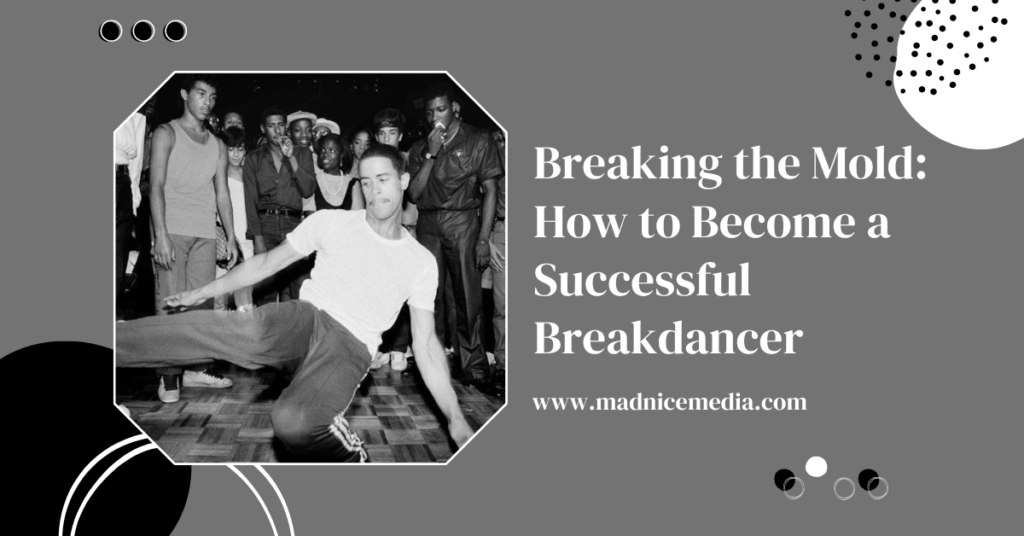
Breakdancing, also known as breaking, is a style of street dance that originated in the Bronx, New York in the 1970s. It involves a combination of acrobatic and athletic movements, such as spins, flips, and freezes, and is often performed in hip-hop music. Becoming a successful breakdancer requires a lot of dedication, hard work, and practice. In this article, we’ll explore the steps you can take to break the mold and become a successful breakdancer.
Understanding the culture, learning essential skills, gathering tips for building a successful career, and overcoming challenges are the pillars of thriving in the culture of hip-hop breakdancing.
Let’s dive deeper into each one of these pillars:
1. Understanding the Culture of Breaking
Breakdancing, also known as breaking, is a dynamic and acrobatic style of dance that emerged in the Bronx in the 1970s. It is one of the pillars of hip-hop culture and has evolved into a competitive dance form with its own unique culture and history. To become a successful breakdancer, it is important to understand the roots and values of breaking.
The Origins of Breaking
Breaking originated in the African American and Latinx communities of the Bronx in the 1970s. It was a response to the social and economic conditions of the time and was a way for young people to express themselves creatively and connect with others. Breaking was influenced by a variety of dance styles, including African and Caribbean dance, tap, and martial arts.
The Elements of Breaking
Breaking consists of four main elements: toprock, downrock, power moves, and freezes. Each element requires a different set of skills and techniques.
- Toprock: Toprock is the footwork and dance moves performed while standing up. It is often used as an introduction to a breaking routine and helps to establish the dancer’s style and rhythm.
- Downrock: Downrock involves floor work and transitions between standing and ground moves. It is also known as footwork and requires a lot of speed, agility, and balance.
- Power moves: Power moves are acrobatic and athletic moves that require strength, flexibility, and momentum. Examples of power moves include windmills, flares, and air flares.
- Freezes: Freezes are static poses held at the end of a routine. They require balance, control, and creativity.
The Values of Breaking
Breaking is not just a dance form, but a culture with its own values and ethics. To become a successful breakdancer, it is important to understand and embrace these values, which include:
- Respect: Respect for other dancers, the culture, and the history of breaking.
- Originality: Developing a unique style and expressing oneself creatively.
- Perseverance: Overcoming challenges and continuously improving one’s skills.
- Community: Building connections with other dancers and contributing to the culture of breaking.
Breaking Competitions and Events
Breaking competitions and events are an important part of the culture and provide opportunities for breakdancers to showcase their skills, compete against other dancers, and connect with the community. Some of the most prominent breaking events include:
- Red Bull BC One: A global breaking competition featuring the world’s best breakdancers.
- Battle of the Year: An international breaking competition that brings together the top crews from around the world.
- UK B-Boy Championships: A breaking competition held in the UK featuring solo and crew battles.
Training and Practice
To become a successful breakdancer, it is important to train and practice regularly. This involves:
- Studying the culture and history of breaking: Learning about the origins and values of breaking.
- Watching and learning from other dancers: Studying the techniques and styles of other breakdancers.
- Developing a training plan: Creating a training plan that includes strength and conditioning exercises, dance drills, and practice sessions.
- Finding a mentor or crew: Seeking guidance and support from more experienced dancers.
- Participating in competitions and events: Building confidence and gaining exposure by competing and performing.
Breaking is a dynamic and competitive dance form that requires a combination of physical skill, creativity, and a deep understanding of the culture and history of breaking. To become a successful breakdancer, it is important to embrace the values of breaking, train and practice regularly, and participate in competitions and events.
2. Essential Skills for Breakdancing
Breakdancing is an athletic and demanding dance style that requires a combination of physical and mental skills. To become a successful breakdancer, you need to have the following essential skills:
Physical Skills
Breakdancing is an extremely physical activity that requires strength, flexibility, and coordination. Here are some essential physical skills needed for breakdancing:
- Strength: Breakdancing requires a lot of upper body strength, especially in the arms, shoulders, and chest, as well as core strength. Strengthening exercises like push-ups, pull-ups, and sit-ups can help build the necessary strength.
- Flexibility: Breakdancing involves a lot of bending, twisting, and stretching of the body. Stretching exercises like lunges, hamstring stretches, and shoulder stretches can help increase flexibility and prevent injury.
- Coordination: Breakdancing requires a high level of coordination between the upper and lower body. Coordination exercises like footwork drills, hand coordination exercises, and practicing moves with music can help improve coordination.
Mental Skills
Besides the physical skills, breakdancing also requires mental skills, such as:
- Creativity: Breakdancing is an art form that allows for a lot of creativity and individual expression. Being able to come up with unique and original moves and routines is an essential skill.
- Determination: Breakdancing can be challenging, and progress can be slow. A successful breakdancer must be determined and motivated to continue practicing and improving.
- Adaptability: Breakdancing is a dynamic and ever-evolving dance form that requires breakdancers to adapt to new music, styles, and moves. Being open to learning and trying new things is essential.
Knowledge and Techniques
Breakdancing has a rich history and culture, and understanding the various elements and techniques is essential for success. Some of the essential knowledge and techniques required for breakdancing include:
- Fundamental moves: Basic moves like top rock, footwork, freezes, and power moves are essential to build a foundation for more advanced moves and routines.
- Musicality: Breakdancing is heavily influenced by music and understanding the rhythms, beats, and timing is essential to create and performing effective routines.
- Battles and competitions: Breakdancing battles and competitions are an essential part of the culture and understanding the rules, formats, and etiquette is essential for success.
By developing these essential skills, breakdancers can enhance their performances, create unique and original routines, and improve their chances of success in competitions and performances.
3. Learning Breakdancing
Breakdancing, also known as breaking, is a style of street dance that originated in the Bronx, New York in the early 1970s. It involves acrobatic and athletic moves such as spins, flips, freezes, and footwork performed to the beat of hip-hop music. Becoming a successful breakdancer requires a combination of physical and mental skills, dedication, and perseverance. Here are some tips for learning breakdancing:
Getting Started
- Find a good teacher: The best way to learn breakdancing is to find an experienced teacher who can guide you through the basics and help you improve your technique.
- Start with the fundamentals: Breakdancing involves many complex moves, but it’s important to start with the basics first. Focus on mastering foundational moves like the six-step, toprock, and freeze before moving on to more advanced moves.
- Practice regularly: Like any other skill, breakdancing requires consistent practice to improve. Set aside time each day or week to practice your moves and build your strength and endurance.
Endurance
Breakdancing can be very physically demanding, so building endurance is important. Incorporate cardio exercises like running or jumping rope into your training routine to improve your stamina.
Mental Skills
- Non-Conformative: Breakdancing is an art form, so creativity is important. Experiment with different moves and combinations to develop your own style.
- Musicality: Breakdancing is performed to the beat of the music, so it’s important to have a good sense of rhythm and timing. Listen to different types of hip-hop music and practice dancing to different tempos.
- Confidence: Breakdancing requires a lot of confidence, especially when performing in front of an audience. Focus on building your confidence by practicing your moves in front of a mirror or with friends.
Learning breakdancing requires a combination of physical and mental skills, dedication, and perseverance. With the right training and practice, anyone can become a successful breakdancer.
4. Tips for Building a Successful Career in Breaking
Breaking, also known as breakdancing, is a dance style that originated in the Bronx, New York in the early 1970s. It has since evolved into a global phenomenon with a rich culture and community. For those passionate about breaking, building a successful career in this field can be a rewarding and fulfilling experience. Here are some tips for achieving success in breaking:
Develop Your Style
Breaking is an art form that is constantly evolving, and it is essential for break dancers to develop their own unique style. By studying the foundations of breaking and exploring various dance movements, you can develop your own individual style that sets you apart from other dancers.
Build a Strong Foundation
Breaking is a physically demanding dance style that requires a lot of strength, flexibility, and agility. It is important to focus on building a strong foundation by practicing the fundamentals of breaking, such as footwork, freezes, and power moves. As you progress, you can start to explore more complex movements and transitions.
Network and Collaborate
Breaking has a strong community of dancers, and networking and collaboration can be essential for building a successful career in this field. Attend events, workshops, and battles, and connect with other dancers and choreographers. Collaborating with other dancers and artists can also help you expand your skills and gain exposure.
Train with Experienced Teachers
Working with experienced teachers and coaches can help you improve your skills and develop your potential as a breakdancer. Look for teachers who have a strong background in breaking and who can provide guidance and support as you develop your craft.
Participate in Competitions
Competitions can be a great way to gain exposure and build your reputation as a breakdancer. Look for local and regional competitions, and participate in as many battles as possible. Even if you don’t win, participating in battles can help you gain experience, build your confidence, and meet other dancers in the community.
Stay up-to-date with the Culture
Breaking is not just a dance style, it is a culture with a rich history and traditions. To build a successful career in breaking, it is important to stay up-to-date with the latest trends, music, and events in the breaking community. This will help you stay connected with the culture and remain relevant as a breakdancer.
Be Persistent and Passionate
Building a successful career in breaking requires persistence and passion. Stay committed to your training, continue to develop your skills, and don’t be afraid to take risks and try new things. With hard work and dedication, you can achieve success as a breakdancer and contribute to the rich culture of breaking.
5. Overcoming Challenges in Breakdancing
Breakdancing, also known as breaking, is a physically demanding and competitive dance form that requires a lot of hard work, dedication, and practice to master. While it can be an incredibly rewarding experience, there are many challenges that aspiring breakdancers may face along the way. Here are some of the most common challenges that breakdancers face, along with tips on how to overcome them.
Physical Challenges
Breakdancing involves a lot of physically demanding movements and requires strength, flexibility, and stamina. Some common physical challenges that breakdancers may face include:
Injuries
Breakdancing can be tough on the body, and injuries are common. Some of the most common injuries in breakdancing include wrist and ankle sprains, knee injuries, and back pain. To avoid injuries, it is important to warm up properly before dancing and to use proper technique when performing moves. Taking breaks when you feel tired or sore can also help prevent injuries.
Fatigue
Breakdancing can be very physically demanding, and it can be easy to get fatigued after a long practice session. It is important to get enough rest and to eat a healthy diet to keep your body in good shape. Stretching and doing yoga can also help improve your flexibility and reduce muscle soreness.
Mental Challenges
In addition to physical challenges, breakdancers may also face mental challenges that can be difficult to overcome. Some of the most common mental challenges include:
Lack of Confidence
Breakdancing can be intimidating, especially for beginners who are just starting out. It is important to remember that everyone starts somewhere and that it is normal to make mistakes. Building confidence takes time, but by practicing regularly and setting achievable goals, you can gradually build your skills and confidence.
Competition Pressure
Breakdancing is a competitive art form, and many breakdancers feel pressure to perform well in competitions. It is important to remember that competitions are just one aspect of breakdancing and that there are many other ways to enjoy the art form. Focus on improving your skills and having fun, rather than winning competitions.
Financial Challenges
Breakdancing can be expensive, and many aspiring breakdancers face financial challenges that can make it difficult to pursue their passion. Some common financial challenges include:
Cost of Classes and Workshops
Breakdancing classes and workshops can be expensive, and not everyone has access to them. However, there are many free resources available online, such as YouTube tutorials and online dance communities. Joining a local breakdancing crew can also provide opportunities to learn and improve your skills.
Cost of Travel and Competition Fees
Traveling to competitions and paying competition fees can also be expensive. However, many competitions offer scholarships and other financial assistance to help cover these costs. Fundraising and seeking sponsorship from local businesses or community organizations can also be a good way to raise funds.
While there are many challenges associated with breakdancing, it is a rewarding and fulfilling art form that can provide many benefits. By being aware of the challenges and taking steps to overcome them, aspiring breakdancers can build the skills, confidence, and financial resources they need to succeed in this exciting and dynamic dance form.
Conclusion
Becoming a successful breakdancer requires dedication, hard work, and a love for the art form. By understanding the culture, developing essential skills, and taking steps to build a successful career, you can break the mold and achieve your dreams as a breakdancer.
If you’re interested in other non-rap careers within hip-hop check out my article.