

Recording music at home can be challenging when it comes to soundproofing. Fortunately, there are several options available to help create a more acoustically sound space. Here are the best at-home recording studio soundproofing options:
Acoustic foam panels, soundproof curtains, bass traps, mass-loaded vinyl, green glue, door and window seals, soundproofing insulation, resilient channel, double drywall, and a room within a room are the best ways to soundproof a home recording studio.
1. Acoustic Foam Panels
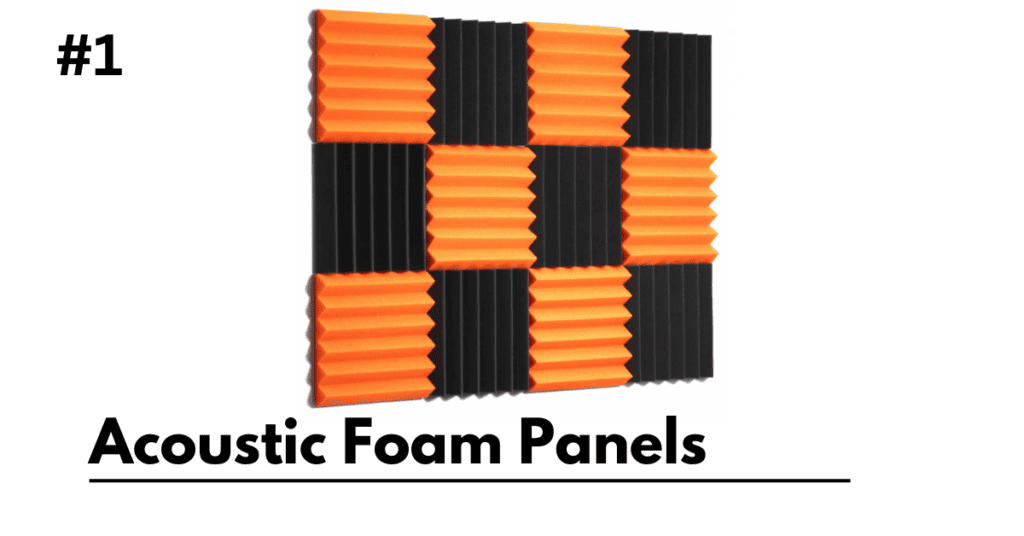
Acoustic foam panels are designed to absorb sound waves, which reduces the amount of echo and reverb in a room. These foam panels come in various shapes and sizes, including pyramid, wedge, and egg crate shapes. They can be easily installed on walls, ceilings, and floors, providing an affordable and effective solution for soundproofing at-home recording studios.
One of the benefits of acoustic foam panels is their ability to absorb mid to high-frequency sounds, which are common in vocals, guitars, and other instruments. These panels can significantly reduce unwanted noise and help create a more acoustically sound space.
When installing acoustic foam panels, it’s important to consider the placement and density of the panels. For example, installing too many foam panels can create a “dead” sound in the room, while not installing enough can result in ineffective soundproofing.
Overall, acoustic foam panels are a popular option for soundproofing at-home recording studios due to their affordability, effectiveness, and ease of installation. Check out the “Overall Pick” for the best consumer-friendly foam panel option here: https://amzn.to/3Rbj3IV (Amazon)
2. Soundproof Curtains
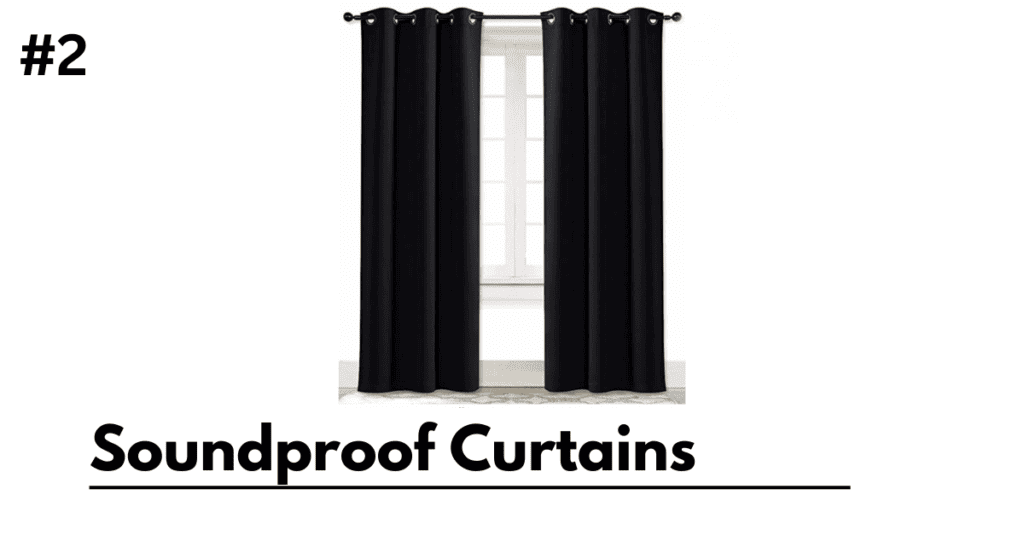
Soundproof curtains are an affordable and easy-to-install option for soundproofing at-home recording studios. These curtains are made with a specialized material that is designed to block sound waves from entering or exiting a room. They work by absorbing sound energy and reducing the amount of noise that passes through the curtains.
Soundproof curtains come in various sizes and designs, making it easy to find a set that matches your home décor. They are typically made with heavy-duty fabrics, such as polyester or velvet, which provide a thick layer of soundproofing. Additionally, some models have multiple layers or an extra lining to enhance their soundproofing capabilities.
One of the advantages of using soundproof curtains is that they can be easily installed and removed, making them a flexible option for renters or those who don’t want to make permanent changes to their homes. They can be hung on a regular curtain rod, and some models come with grommets or hooks that make it easy to hang them securely.
Soundproof curtains are also versatile and can be used in a variety of settings beyond recording studios, such as bedrooms, living rooms, and home theaters. They can block out external noise, such as traffic or neighbors, creating a more peaceful and quiet environment.
While soundproof curtains are effective at reducing noise, they may not provide the same level of soundproofing as more advanced methods such as building a room within a room or usingmass-loadedd vinyl. However, they are an affordable and practical solution for those who want to reduce noise levels in their at-home recording studio or living space without undertaking major construction projects. Check out the “Overall Pick” for the best consumer-friendly soundproof curtain option here: https://amzn.to/3RkmQ6C (Amazon)
3. Bass Traps
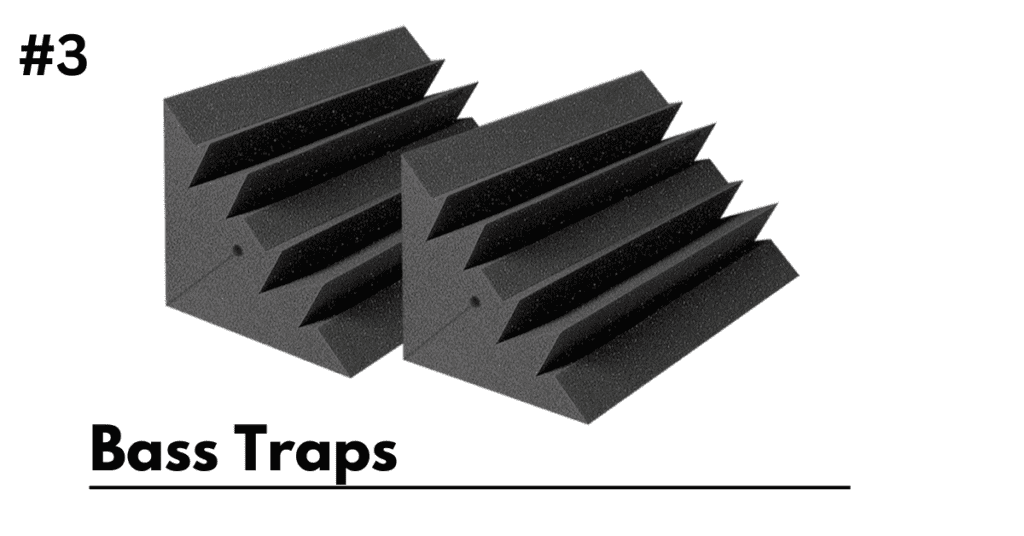
Bass traps are sound-absorbing devices designed to control the buildup of low-frequency sound waves in a room. They are typically placed in corners and near walls, where low-frequency sound tends to accumulate. Bass traps come in various shapes and sizes, including triangular, rectangular, and cylindrical.
Bass traps work by absorbing sound waves that bounce off walls and corners, which can cause a build-up of bass frequencies. This results in a muddy and boomy sound that can be especially problematic in small or untreated rooms. By reducing the amount of low-frequency sound in a room, bass traps can improve the clarity and definition of music and other audio recordings.
Bass traps are made from materials such as fiberglass, rock wool, and foam, and can be covered in a variety of fabrics or other materials to blend in with the decor of a room. They are often installed in pairs, with one placed in each corner of a room, although additional bass traps can be added as needed.
While bass traps are primarily used to control low-frequency sound, they can also provide some degree of overall sound absorption. However, they are most effective when used in combination with other sound-absorbing materials, such as acoustic foam panels and soundproof curtains. Check out the “Overall Pick” for the best consumer-friendly bass trap option here: https://amzn.to/3Rdtn2X (Amazon)
4. Mass Loaded Vinyl
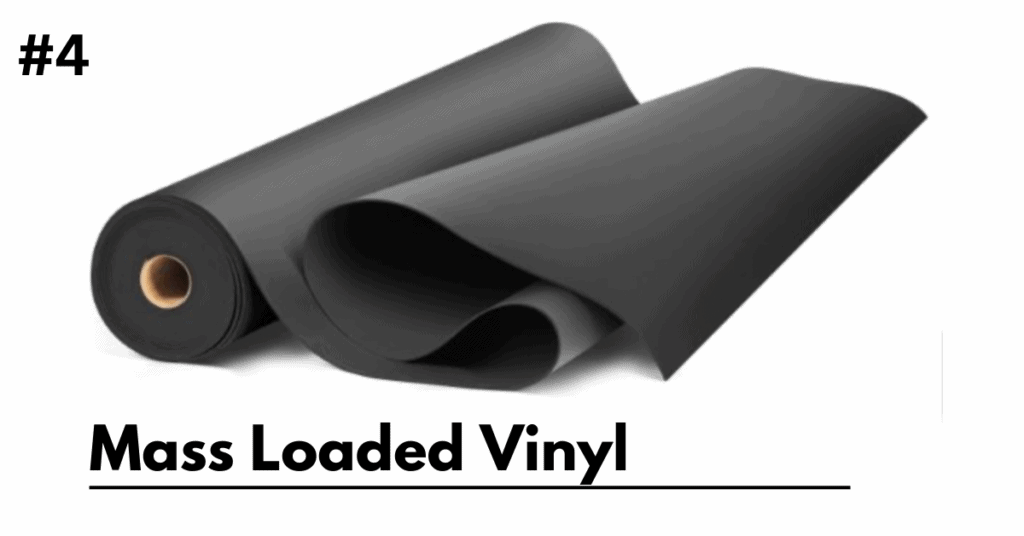
Mass-loaded vinyl (MLV) is a specialized material used in soundproofing applications. It is a dense, flexible, and heavy vinyl sheeting that is often used to reduce noise transmission through walls, floors, and ceilings. MLV is an effective barrier against noise, and its high density helps to absorb and reflect sound waves.
MLV works by adding mass to a surface, reducing the amount of sound passing through it. The vinyl sheeting is often installed on walls and ceilings, as well as beneath flooring materials, to create a soundproof barrier. It can also be used to wrap pipes and ducts to reduce noise from HVAC systems.
One of the advantages of MLV is its flexibility, which allows it to conform to irregular surfaces and contours. It can be easily cut and shaped to fit around corners, outlets, and other obstacles. Additionally, MLV is resistant to moisture and mildew, making it ideal for use in damp environments.
When using MLV for soundproofing, it is important to ensure that it is installed properly to achieve the best results. It should be installed with a 1/4 inch gap between it and the wall, and it should be sealed tightly to prevent any gaps that may allow sound to leak through.
Overall, Mass-loaded vinyl is a versatile and effective material for soundproofing at-home recording studios, and it can be used in combination with other soundproofing materials to achieve maximum results. Check out the “Overall Pick” for the best consumer-friendly mass-loaded vinyl here: https://amzn.to/45WPvTm (Amazon)
5. Green Glue
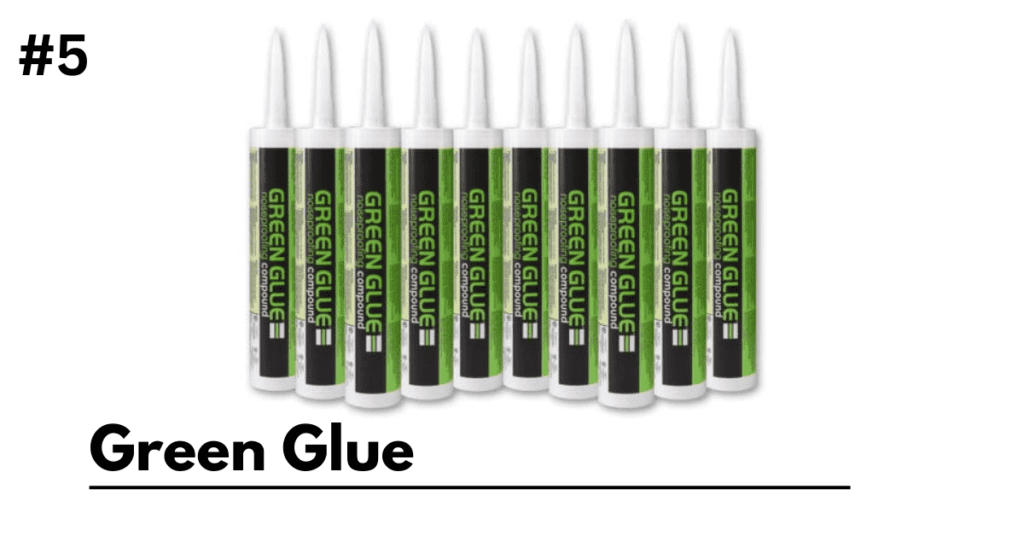
Green Glue is a viscoelastic compound that is used to reduce sound transmission between two surfaces. It is often used as a layer between two sheets of drywall or wood to create a more soundproof space.
Green Glue is a unique product because it is designed to convert sound energy into heat, dissipating sound waves and reducing their transmission. When applied between two surfaces, Green Glue forms a flexible, viscoelastic layer that can absorb vibrations and reduce the amount of sound that passes through.
The application of Green Glue is relatively simple. First, the drywall or wood panels should be cut to size and screwed into place. Then, a layer of Green Glue is applied to the back of one panel using a standard caulking gun. The second panel is then placed on top of the Green Glue layer and screwed into place, creating a sandwich with the Green Glue layer in the middle.
Green Glue can also be used with other soundproofing materials, such as mass-loaded vinyl or acoustic foam panels, to create a more effective soundproofing solution. It is important to note that Green Glue is not intended to be used on its own and should always be used in conjunction with other soundproofing materials.
Overall, Green Glue is an effective and affordable solution for reducing sound transmission between surfaces and creating a more soundproof space. Check out the “Overall Pick” for the best consumer-friendly Green Glue option here: https://amzn.to/45FysFH (Amazon)
6. Door and Window Seals

Doors and windows are often the weakest points in a room when it comes to soundproofing. Even a small gap or crack around a door or window can allow a significant amount of noise to enter or exit a room. This is where door and window seals come in.
Door and window seals are typically made from neoprene, silicone, or foam rubber, and are designed to fit snugly around the perimeter of doors and windows. They can also be installed on door thresholds and the bottom of doors to create a more complete seal.
By installing door and window seals, you can reduce the amount of sound that can enter or exit a room, creating a more acoustically sound space. They are also easy to install and can be an affordable solution for those looking to improve the sound quality of their at-home recording space.
When choosing door and window seals, it’s important to make sure that they fit properly and are made from high-quality materials that can withstand wear and tear over time. Additionally, it’s important to make sure that the seals don’t interfere with the operation of doors or windows, as this can lead to other problems such as air leaks or difficulty opening and closing. Check out the highest-rated consumer-friendly door and window seal option here: https://amzn.to/3Z8EiwR (Amazon)
7. Soundproofing Insulation
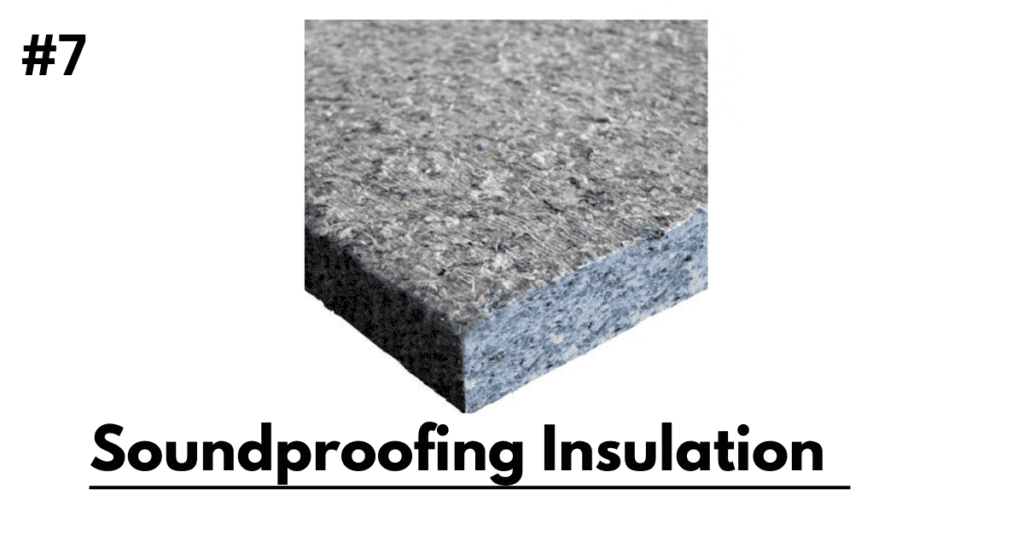
Soundproofing insulation is a type of insulation that is specifically designed to absorb and dampen sound waves, reducing the amount of noise that can pass through walls, ceilings, and floors. It is commonly used in recording studios, home theaters, and other spaces where noise control is important.
There are several types of soundproofing insulation, including fiberglass batts, mineral wool, and spray foam. Fiberglass batts are one of the most common types of soundproofing insulation and are relatively easy to install. Mineral wool is another popular denser option and provides better sound absorption than fiberglass. Spray foam insulation is a more expensive option but provides excellent soundproofing properties and can be used to fill gaps and cracks in walls and ceilings.
When installing soundproofing insulation, it is important to ensure that it is properly fitted and sealed to prevent any gaps or spaces where sound can escape. It is also important to use the appropriate amount of insulation for the specific space and to consider factors such as the thickness of walls and ceilings.
Overall, soundproofing insulation is an effective option for reducing noise transmission in at-home recording studios and other spaces where sound control is important. It can help create a more acoustically sound space by absorbing sound waves and reducing the amount of external noise that can enter the space. Check out this popular brand pick for soundproofing insulation, typically used within cars here: https://amzn.to/489LxbZ (Amazon)
8. Resilient Channel
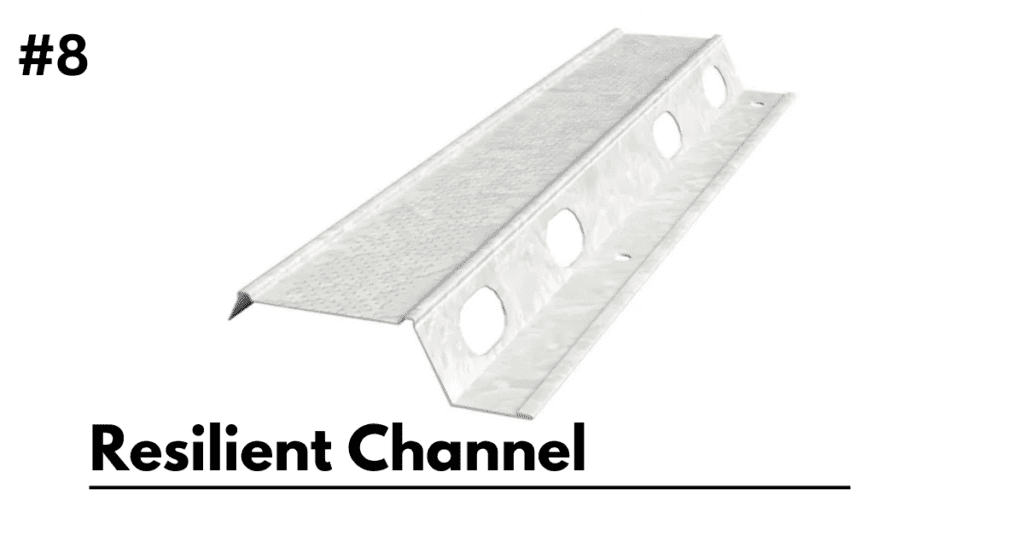
A resilient channel is a type of metal channel that is often used in soundproofing walls and ceilings. It works by creating a decoupled surface between the drywall and the underlying structure of the wall or ceiling.
When a resilient channel is installed, it is attached to the studs or joists of the wall or ceiling with screws. Then, the drywall is attached to the resilient channel, creating a floating surface that is not directly connected to the underlying structure. This decoupling reduces the amount of sound that can be transmitted through the wall or ceiling, making it a popular option for soundproofing at-home recording studios.
A resilient channel is also flexible, which allows it to absorb some of the vibrations that are created by sound waves. This further reduces the amount of sound that is transmitted through the wall or ceiling.
It’s important to note that the proper installation of resilient channels is crucial for its effectiveness. If it is not installed correctly, it may not provide the desired level of soundproofing. It’s recommended to consult a professional or follow detailed installation instructions to ensure that the resilient channel is installed properly. Check out the “Overall Pick” for the best consumer-friendly resilient channel option here: https://amzn.to/3sKfqQ5 (Amazon)
9. Double Drywall
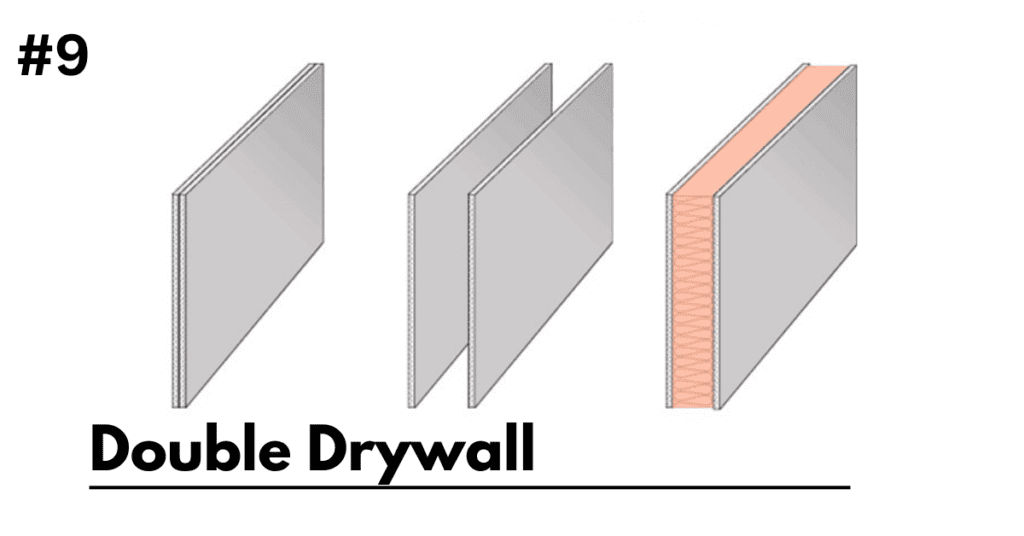
Double drywall is a common soundproofing method used in recording studios and other sound-sensitive environments. As the name suggests, this method involves installing two layers of drywall on top of one another, with a layer of Green Glue sandwiched in between them.
Green Glue is a viscoelastic compound that acts as a sound-dampening material. When squeezed between two layers of drywall, it creates a layer of vibration-damping material that absorbs sound energy and prevents it from transmitting through the walls. The result is a reduction in the amount of sound that can pass through the wall, which helps to create a more acoustically sound space.
Double drywall with Green Glue is particularly effective at blocking airborne sound transmission. This includes sounds such as talking, music, and other noises that travel through the air. However, it may not be as effective at blocking impact noise, which is the noise that is created by vibrations transmitted through a surface, such as footsteps or slamming doors.
In addition to its soundproofing properties, double drywall with Green Glue also has other benefits. It can help to increase the structural integrity of the wall, making it stronger and more resistant to damage. It can also improve fire resistance, as two layers of drywall provide better fire protection than a single layer.
Overall, double drywall with Green Glue is a cost-effective and relatively easy-to-install soundproofing solution that can significantly improve the acoustics of an at-home recording studio. Check out the most purchased and reviewed drywall hand tool kit on Amazon here: https://amzn.to/3LbBXLW (Amazon)
10. Room within a Room
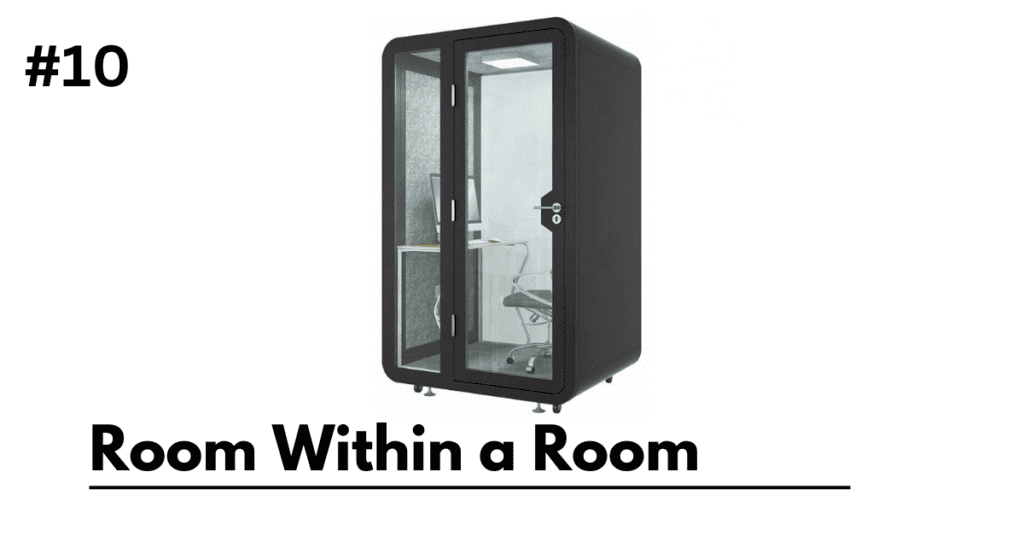
A room within a room is the most effective method for soundproofing an at-home recording studio. This technique involves building a separate room inside an existing room, creating a soundproof barrier between the two spaces.
To build a room within a room, you first need to create a frame for the inner room using lumber and drywall. This frame should be completely separate from the outer walls of the existing room, with a gap of at least a few inches between the two structures. The space between the two rooms can be filled with soundproofing insulation or other sound-absorbing materials.
The inner room should also have a separate floor, which can be constructed using layers of soundproofing materials such as mass-loaded vinyl and acoustic underlayment. The ceiling of the inner room can also be constructed using a similar method, with a layer of insulation sandwiched between two layers of drywall.
All electrical outlets and light fixtures in the inner room should be installed using soundproofing boxes, which help to reduce the amount of sound that can pass through the walls. Doors and windows in the inner room should also be sealed using specialized soundproofing seals.
Overall, building a room within a room can be a time-consuming and costly process, but it provides the most effective soundproofing solution for at-home recording studios. This technique creates a completely isolated space for recording, with minimal sound transmission between the inner and outer rooms. Check out the “Overall Pick” for the best consumer-friendly portable recording booth option here: https://amzn.to/46lmO31 (Amazon)
With these top 10 at-home recording studio soundproofing options, you can create a more acoustically sound space for recording music at home. Also, here is an article I wrote to go over the other important components when building your own home recording studio.
Pingback: Building Your Own Home Recording Studio – MadNice Media